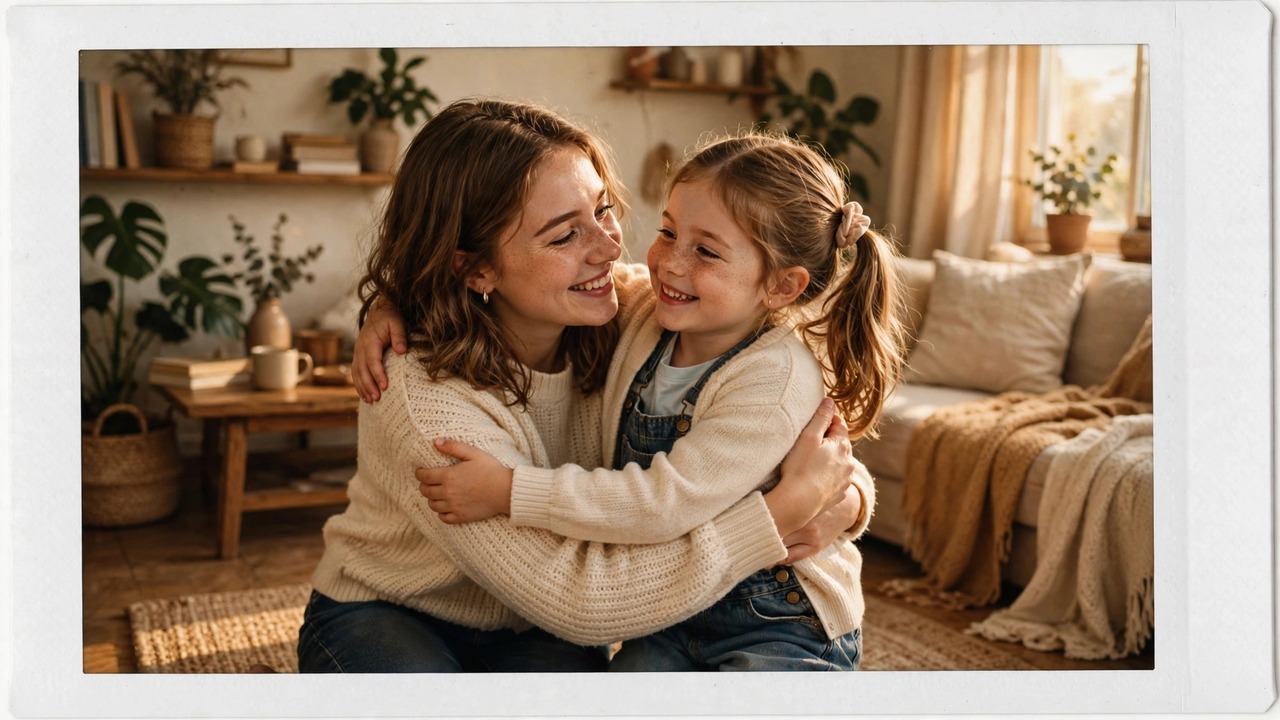
I wasn’t planning to cry on a Tuesday afternoon. But there I was, scrolling through my feed, when a photo stopped me cold — a woman my age, kneeling down and hugging a little girl who was clearly her younger self. Same eyes. Same smile. It looked like a memory that had somehow learned to hug back.
Within two minutes I’d seen five more. A man laughing with his 8-year-old self on a sofa. A grandmother holding her childhood self in a black-and-white frame. Every single one had that soft polaroid look, and every caption said some version of: I made this with AI, and I’m not okay. This is the Hug My Younger Self AI trend, and honestly? It’s the most beautiful thing the internet has done in a long time.
I dug out my own childhood photo that same evening — you know the one, slightly faded, weird haircut — and tried it myself. What came back made me sit quietly for a while. So here are my three tested prompts, the exact words I used, so you can make your own.
What Is the Hug My Younger Self AI Trend?
You upload two photos: one of you now, one of you as a kid. Then you give an AI image tool a prompt asking it to create a single warm photo of your present self hugging your younger self — like the two of you finally met. Most people go for the polaroid style: soft grain, warm tones, white border, like a picture pulled from a family album.
The trend took off with Google’s Nano Banana image model, which is unusually good at keeping faces consistent across edits — and news outlets picked it up once public figures started joining in. But the prompt itself works in any AI image tool that can edit photos. You don’t need anything special, just the two pictures.
Why This One Hits Different
Most AI photo trends are about looking cooler — better lighting, dreamier backgrounds. This one is about feeling something. There’s a whole lifetime between those two photos: everything the kid dreamed of, everything the adult survived. Seeing them hug collapses all of that into one frame.
That’s the quiet power of the Hug My Younger Self AI trend — people aren’t just liking these, they’re sharing them with long captions, tagging siblings, calling their parents. It’s the rare trend that’s genuinely tender instead of just trendy.
What You Need Before You Start
Just two photos: 1. A recent, clear photo of you — face visible, natural expression. 2. A childhood photo of you — even a slightly blurry old scan works, the AI is forgiving.
Tip: photos where you’re facing the camera work best. And if your childhood photo is a physical print, just take a clear phone photo of it in daylight — no scanner needed.
How to Make Your Own (Takes About 5 Minutes)
1. Open any AI image tool that can edit or combine photos. 2. Upload your current photo first, then your childhood photo. 3. Paste one of the prompts below exactly as written. 4. Hit generate. If the hug looks awkward, run it once more — the second attempt is usually the keeper.
That’s the whole Hug My Younger Self AI trend workflow — two photos, one prompt, five minutes.
3 Hug My Younger Self Prompts (Copy-Paste Ready)
Three moods I tested myself. The image comes first so you know what to expect, then the prompt with a one-tap copy button.
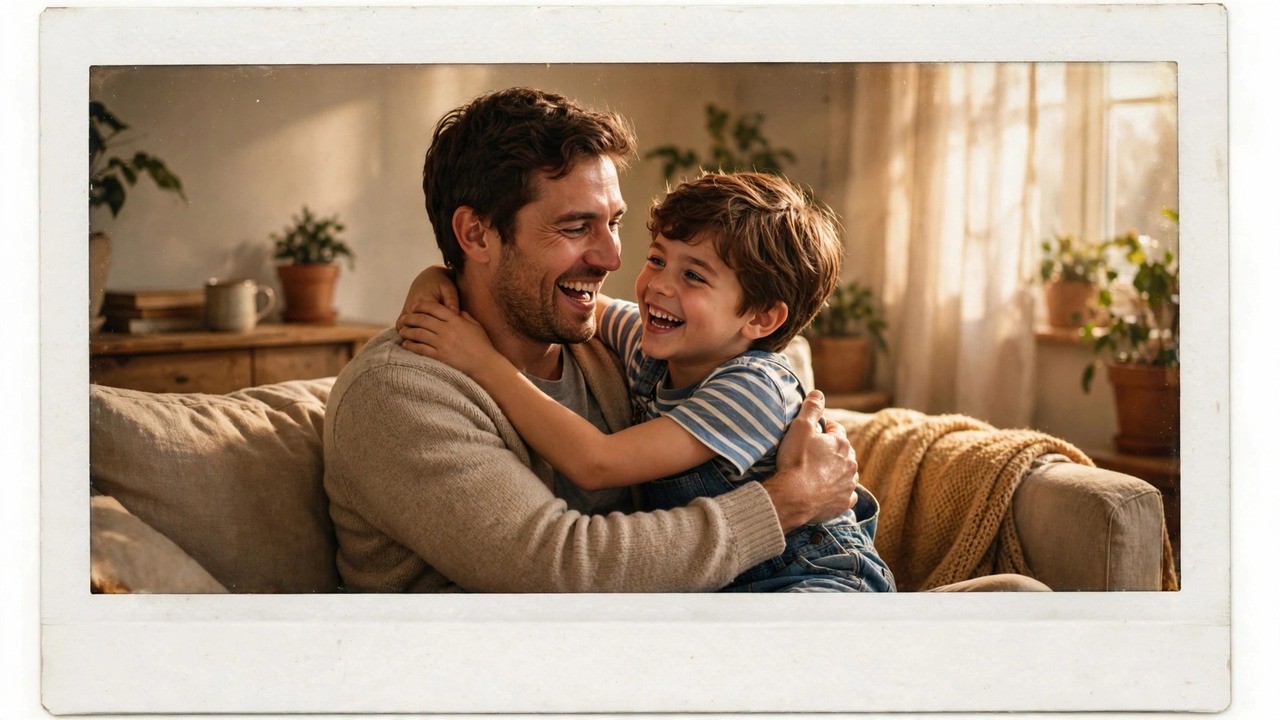
Prompt 1 — The Classic Polaroid Hug
Using these two photos — my current photo and my childhood photo — create a warm polaroid-style photograph of my present self hugging my younger self. Keep both faces exactly the same with natural, genuine smiles. Cozy home interior, soft warm window light, nostalgic film grain, gentle golden tones, white polaroid border. Tender and emotional, photorealistic.
My take: Start here. This is the version everyone recognises — the polaroid look is what made the trend famous, and it suits almost any pair of photos.
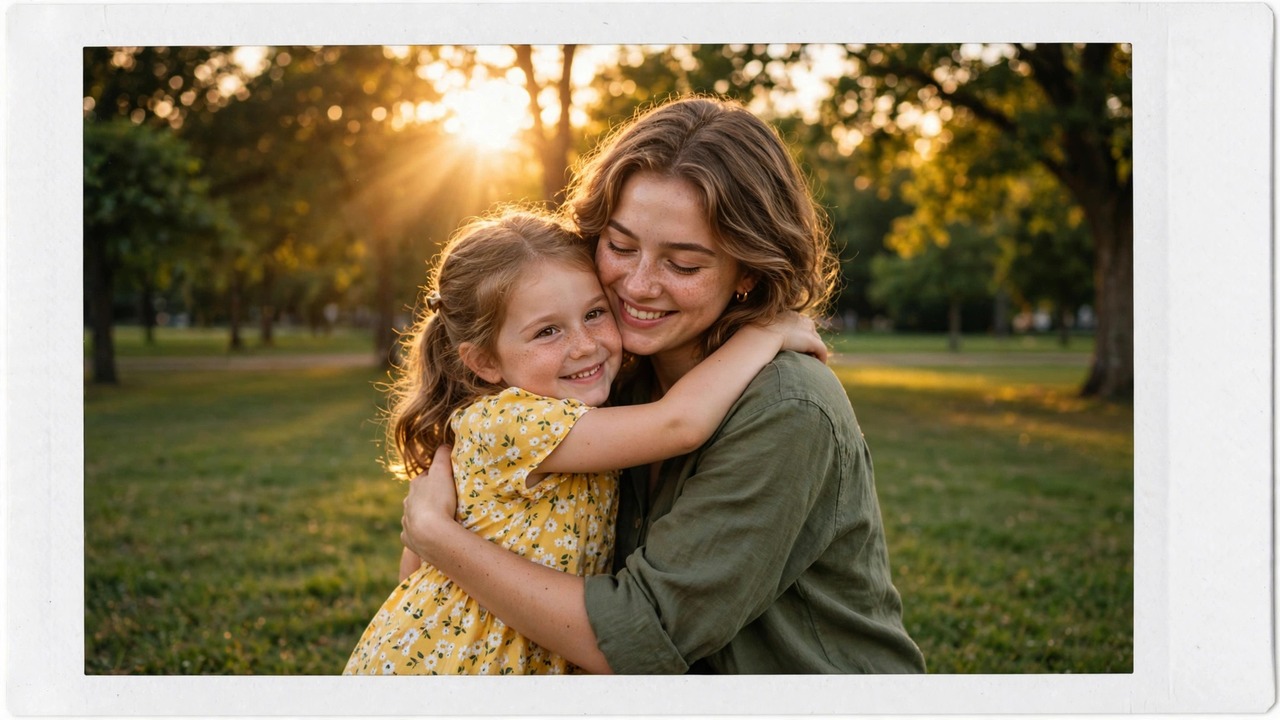
Prompt 2 — Golden Hour in the Park
Using these two photos — my current photo and my childhood photo — create a heartwarming polaroid-style photo of my present self hugging my younger self in a green park at golden hour, sunlight glowing through the trees behind us. Keep both faces exactly unchanged, joyful natural expressions. Warm dreamy tones, soft nostalgic film grain, white polaroid border. Photorealistic, deeply emotional.
My take: If your childhood photo was taken outdoors, this one feels like a memory coming full circle. The golden light does something to people — this version gets the most “I’m crying” comments.
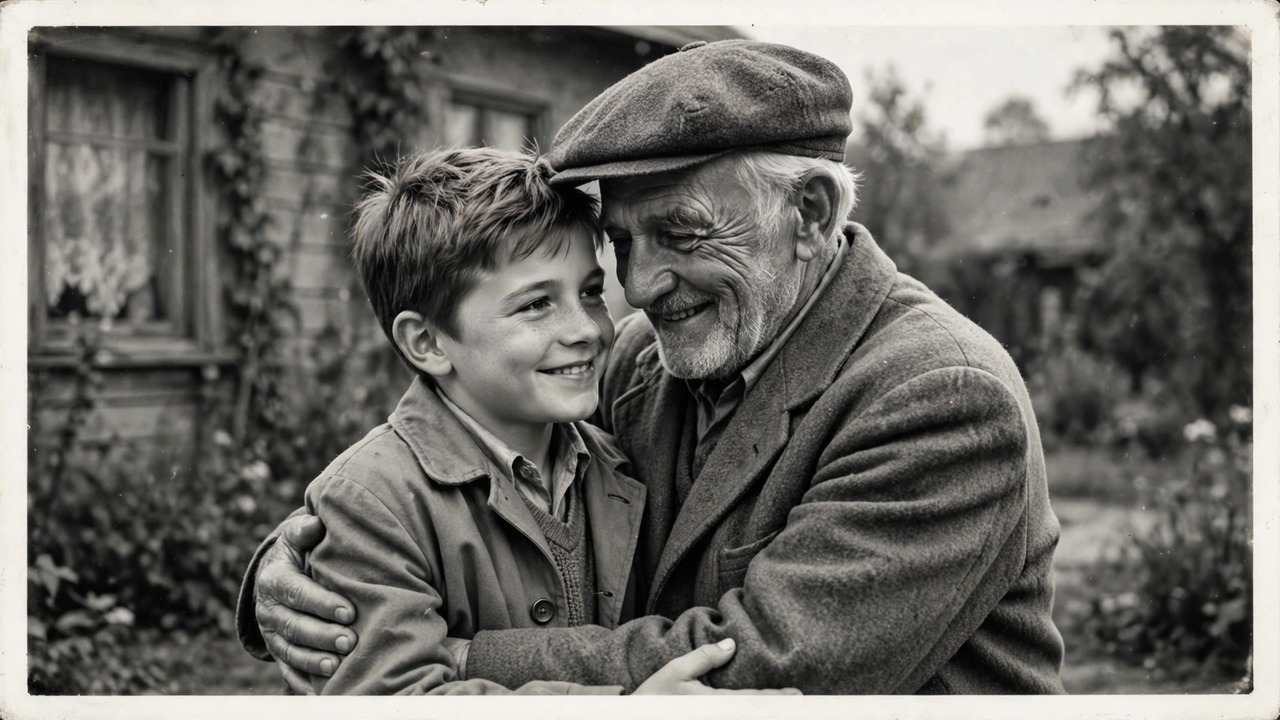
Prompt 3 — Timeless Black and White
Using these two photos — my current photo and my childhood photo — create a timeless black-and-white vintage photograph of my present self embracing my younger self. Classic film photography look, soft grain, elegant monochrome tones, subtle white border. Keep both faces exactly the same with gentle smiles. Deeply nostalgic and emotional, photorealistic.
My take: This one hits grandparents and parents hardest. There’s something about black and white that makes it feel like a family heirloom instead of an AI picture.
Tips for a Photo That Looks Real
Match the vibe: if your childhood photo is blurry and old, the polaroid or vintage prompt hides that beautifully.
Keep faces front-facing in both uploads. The AI matches faces best when it can see them clearly.
Don’t overthink the hug pose. The prompts handle it — just let the AI place you both naturally.
If the younger you looks slightly off, regenerate once. Face consistency improves a lot on the second run.
Save your original childhood photo scan separately. You’ll want to compare them side by side later — trust me.
Hug My Younger Self AI Trend FAQs
Q: Is the Hug My Younger Self AI trend free? A: Yes. It started on a free image model, and the prompts work in most free AI photo tools. You just need your two photos.
Q: Do I need my real childhood photo, or can the AI imagine one? A: Use a real one — that’s the whole point. The trend is about you meeting your actual younger self. A phone photo of an old print works fine.
Q: Will the AI keep our faces accurate? A: Mostly yes, especially on the second try. Every prompt above says to keep both faces exactly the same. If a face drifts, regenerate rather than accepting a wrong face.
Q: Can I make one for my parents or partner? A: Of course — with their permission and their photos. These make incredibly moving gifts. A lot of people are printing and framing them.
Q: Why does everyone choose the polaroid style? A: Because it looks like a real memory. The white border and film grain trick your brain into filing it with actual old photos — which is exactly why it makes people emotional.
Of all the trends I’ve covered, this is the one I’d tell you not to skip. It takes five minutes, costs nothing, and you end up holding a photo of the two of you — the kid you were and the person you became — finally in the same frame.
If you want more like this, try my Flash Light AI photo prompts for cinematic glow portraits, or the dreamy Realistic Grass photo prompts. And if videos are more your thing, the Car Driving AI video trend is pure fun. If the Hug My Younger Self AI trend taught me anything, it’s this: go hug your younger self — they’ll be glad to see you.
About Pinky Chouhan
Hey, my name is Pinky Chouhan, and I live in India. I am passionate about discovering new AI trends, AI video tools, and social media content ideas. I also have experience in video and photo editing using tools like CapCut, Adobe, InShot, and VN. Over time, I have worked on many editing projects and enjoy experimenting with new creative techniques and AI-powered tools. I regularly share the latest AI trends, video prompts, and creative ideas on The Prompt Master. My goal is to provide simple and practical prompts that anyone can use to create engaging AI videos. Most of the prompts published on this website are designed to be easy to use. You can simply copy a prompt, paste it into Google Flow or a compatible AI video tool, and start creating your video. I will continue sharing new AI trends, useful prompts, editing tips, and creative ideas to help creators make better content and stay updated with the fast-changing world of AI.