
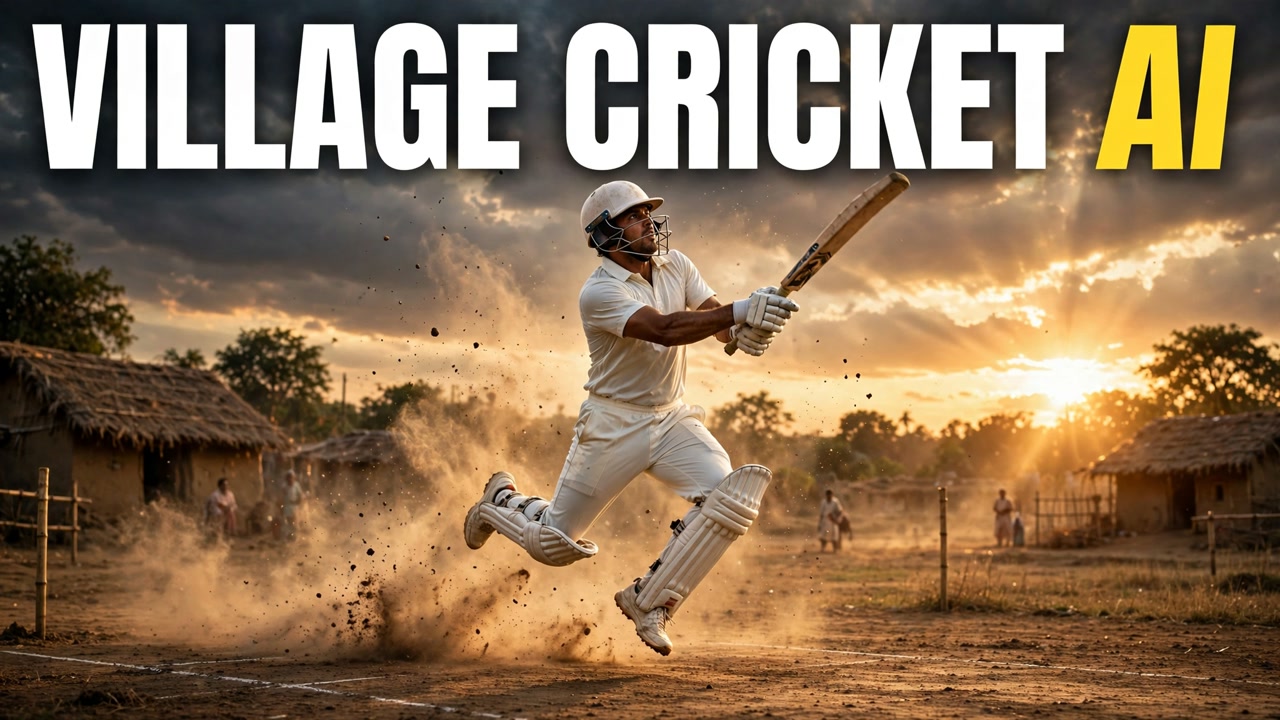
A dusty pitch, a batter in white, and one shot that makes the whole reel stop. The batter jumps, the bat swings high, dust kicks up behind the feet, and the camera follows the bat like it was waiting for that exact moment. That is the village cricket shot going around Instagram right now, and it works because it looks like real cricket — not a costume, not a filter, just a great shot.
The village cricket ai video trend is simple at its core: take your own photo, turn it into the batter in that shot, and let the camera copy the stance, the backlift, and the swing. Tutorial clips from the last few days show the same mechanic again and again — one photo, one prompt, one pull shot — which is why viewers recognise it in the first second, even with the sound off.
Below are three original prompts that recreate the effect from scratch — the flagship village pull shot, a gully-cricket version at golden hour, and a slow-motion backlift close-up. Each one comes with a demo video first, so you can see exactly what the prompt produces before you use it. The demo videos here are AI-generated approximations of the trend, not true reference-photo output — your own result will follow your own photo.
What Is This Format?
The format is a single cricket shot, shot like a film scene. It starts with the batter already in position: feet set, bat lifted, eyes on the ball. Then the swing happens — high, confident, and a little exaggerated, the way a pull shot looks when someone really middles it. Dust, light, and camera movement do the rest.
The best versions keep the camera on the batter, not on the crowd. A wide shot makes the swing look small. A close, low camera makes the same swing look huge, because the bat crosses the whole frame and the dust fills the air behind it. That is why the viral clip works: the camera is close enough to feel the shot, but steady enough to follow it cleanly.
Why is it spreading in India right now? Cricket needs no explanation here. Everyone has played gully cricket, everyone knows a pull shot, and everyone has a photo that could become the batter. The format is also easy to remake: one photo, no dialogue, no dance steps, no costume change. One shot, done well, is the whole reel.
Prompt 1: The Flagship Pull Shot
The classic version, and the one people recognise first. A batter in a white traditional outfit on a dusty village pitch, jumping into a high pull shot while dust kicks up around the feet. It is clean, dramatic, and unmistakably the trend.
Using AI video generation, create a photorealistic cinematic vertical video (9:16) of a village cricket pull shot, based on the uploaded reference photo.
The scene: a dusty village cricket pitch in warm daylight, with a few trees and simple houses softly blurred in the background. Keep the person’s face, skin tone, and identity exactly as in the reference photo, dressed in a clean white traditional outfit.
The moment: the batter is already in position, feet set, bat lifted in a high backlift. Then the batter jumps slightly and plays a confident high pull shot, the bat swinging smoothly through the frame while a little dust kicks up around the feet.
Style: photorealistic, smooth steady camera work that follows the bat, cinematic light, ultra-detailed. Vertical 9:16. No text overlays, no watermarks, no logos, no copyrighted characters, no real cricketer’s likeness.
Let the bat lead the camera. If the camera stays still, the swing looks flat. If it follows the bat through the shot, the same swing looks powerful. The prompt already asks for that follow — do not remove it.
Prompt 2: The Gully Version
The version most people will actually post. Gully cricket at golden hour, casual clothes, friends watching from the side, and the same confident pull shot. It feels less staged than the village pitch version, because it looks like an evening game everyone has played.
Using AI video generation, create a photorealistic cinematic vertical video (9:16) of a gully cricket pull shot, based on the uploaded reference photo.
The scene: a village street or open ground at golden hour, with a few friends watching from the side, softly out of focus. Keep the person’s face, skin tone, and identity exactly as in the reference photo, dressed in simple casual clothes.
The moment: the batter plays a confident pull shot in the evening light, the bat swinging cleanly through the frame while warm sunlight and a little dust fill the air. The friends in the background react naturally, without stealing focus from the batter.
Style: photorealistic, warm golden-hour light, smooth steady camera work, ultra-detailed. Vertical 9:16. No text overlays, no watermarks, no logos, no copyrighted characters, no real cricketer’s likeness.
Keep the crowd soft. Friends in the background make the shot feel real, but if they are too sharp, the eye wanders. Soft background, sharp batter — that is the whole trick.
Prompt 3: The Slow-Motion Backlift
The close-up version. A low, dramatic camera, a slow-motion backlift, dust particles glowing in the sunset light, and the bat moving through the frame like a scene from a sports film. It is quieter than the first two, and that is its strength — it rewards a second watch.
Using AI video generation, create a photorealistic cinematic vertical video (9:16) of a slow-motion cricket backlift and pull shot, based on the uploaded reference photo.
The scene: a village field at sunset, shot from a low angle. Keep the person’s face, skin tone, and identity exactly as in the reference photo, dressed in a clean white outfit.
The moment: in slow motion, the bat lifts into a high backlift, dust particles glow in the golden light, and then the bat swings smoothly through the shot. The camera stays low and dramatic, following the bat without shaking.
Style: photorealistic, slow motion, golden sunset light, smooth steady camera work, ultra-detailed. Vertical 9:16. No text overlays, no watermarks, no logos, no copyrighted characters, no real cricketer’s likeness.
Do not rush the backlift. A slow-motion shot works because the lift takes its time. If the swing is too fast, it looks like any other clip. Let the bat rise, let the dust hang, then let the shot land.
How to Make It
Start with one clear photo of yourself. A standing photo in daylight works best, because the tool needs a clean face and a clear body shape to turn you into the batter. A blurry photo, a photo with sunglasses, or a group photo will all make the result worse — the tool will guess, and the guess will show.
Next, open any image-to-video AI tool. The prompts above are tool-agnostic and work with the usual options — Google Flow, Runway, Kling, Luma, Pika, and similar tools. Upload your own photo before pasting the prompt, or your face and outfit will not stay consistent.
Then copy one prompt exactly as written and paste it in. The lines about keeping your face and identity, and the lines saying no real cricketer’s likeness, are doing real work — they stop the tool from turning you into someone else, or from copying a famous player’s face. Keep them in.
Generate two or three versions and post the strongest one. The first try sometimes makes the bat bend, the feet slide, or the dust look like smoke. Once you have a steady batter, a clean bat swing, and dust that looks like dust, you have the clip. If you want to try the village cricket ai video format yourself, pick a prompt above, upload your own photo, and make your video with your own face.
And one rule that matters: use your own photo only. Putting someone else’s face in a cricket shot without their permission is a problem, even when the shot is just a game. Your photo, your swing, your video.
Tips That Actually Help
Pick one shot and stick to it. A single pull shot reads instantly. A whole over — defence, drive, pull, sweep — turns into a highlights reel, and the clip stops being about one great moment.
Keep the background simple. A dusty pitch, a street, a field — one place, not five. A busy background fights the batter for attention, and the swing loses.
Do not copy a famous player’s face. The trend works because it is you playing the shot, not because it looks like a star. Your face is the point.
Post the three as a series. Flagship pull shot, gully version, slow-motion backlift — three videos, three days, one series. Series accounts tend to grow faster because people follow to catch the next part, and a cricket series gives viewers a reason to check back.
Save the slow-motion version for the best light. Sunset light makes dust glow, and glowing dust makes a slow-motion shot look expensive. Film the reference photo in daylight, but let the prompt do the sunset.
Frequently Asked Questions
What is this trend, exactly?
It is a short video where a person’s own photo becomes a cricket batter playing a high pull shot on a village pitch, with the camera following the bat. The prompts in this post give you the exact batter, camera, and swing instructions.
Which AI tool makes these videos?
Any image-to-video tool works — Google Flow, Runway, Kling, Luma, Pika, and similar tools. The prompts above are tool-agnostic. Start on a free tier, make a test video, and only think about a paid plan if you like the results.
Do I need a video or a photo to start?
A photo is enough, and a clear standing photo in daylight works best. Upload it, paste the prompt, and the tool generates the whole scene. A short starting video can work too, but a sharp photo gives the most consistent face.
Is this a real cricket shot or an AI effect?
It is an AI-generated recreation of a shot, made from your own photo. Do not present it as a real match clip, and do not claim it shows a real cricketer.
Can I use a friend’s photo in the shot?
Only with that friend’s clear permission, and even then, your own photo is the safer choice. The trend is built for self-photos, and self-photos avoid every permission problem.
Final Words
The formula is simple: one steady batter, one high swing, one camera following the bat. If you want to try the village cricket ai video trend yourself, pick a prompt above, upload your own photo, and make your video before the format fades.
And if you like short video formats, check out my AI video prompts for reels too — the trending collection gets a new format every week. If you want to read more about AI video tools, this Google Flow guide is useful.
About Pinky Chouhan
Hey, my name is Pinky Chouhan, and I live in India. I am passionate about discovering new AI trends, AI video tools, and social media content ideas. I also have experience in video and photo editing using tools like CapCut, Adobe, InShot, and VN. Over time, I have worked on many editing projects and enjoy experimenting with new creative techniques and AI-powered tools. I regularly share the latest AI trends, video prompts, and creative ideas on The Prompt Master. My goal is to provide simple and practical prompts that anyone can use to create engaging AI videos. Most of the prompts published on this website are designed to be easy to use. You can simply copy a prompt, paste it into Google Flow or a compatible AI video tool, and start creating your video. I will continue sharing new AI trends, useful prompts, editing tips, and creative ideas to help creators make better content and stay updated with the fast-changing world of AI.