
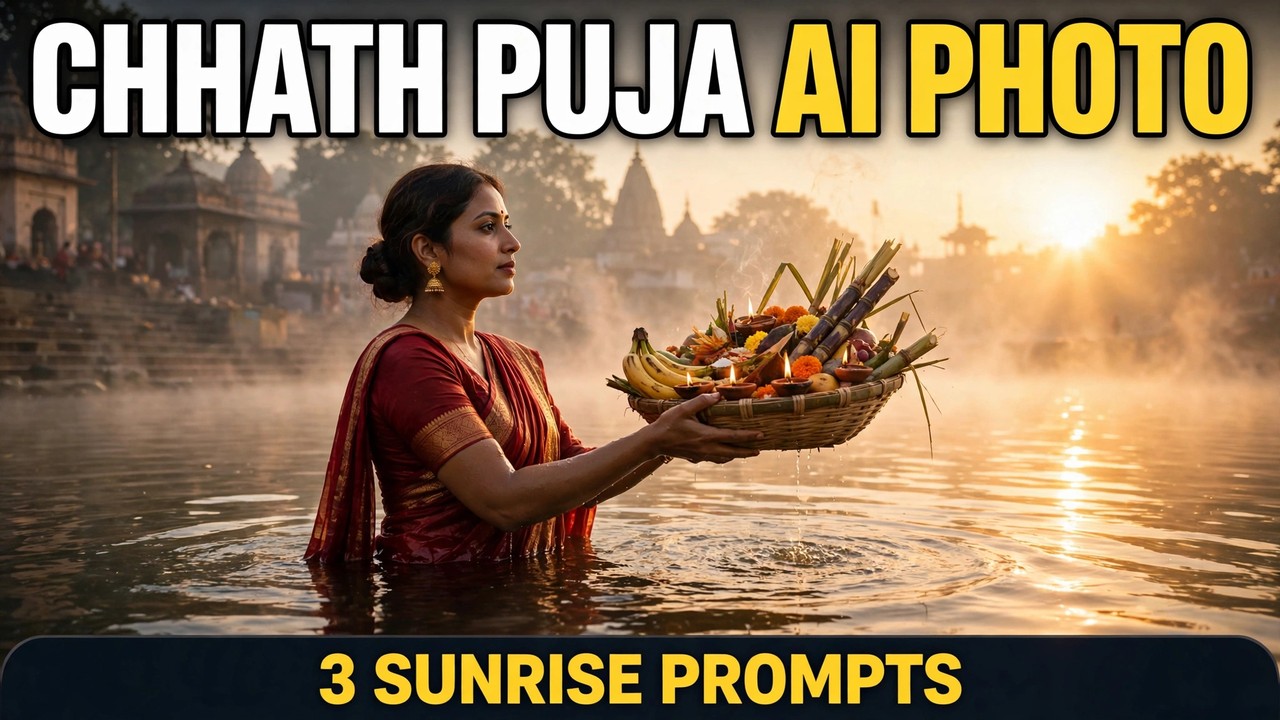
Some festivals are loud. Chhath Puja is not one of them. It is early morning, cold river water, a bamboo basket of fruit and sweets, and a person standing still as the sun comes up. The photograph, when it works, is quiet in exactly the same way the festival is quiet.
Chhath Puja falls on 13–16 November 2026, when families in Bihar, eastern Uttar Pradesh, Jharkhand and Nepal gather at river ghats to offer arghya — water and prayers offered to the rising and setting sun. The most shared photographs from the festival are simple ones: a person waist-deep in the river at sunrise, a basket of offerings held up to the light, or a close view of the soop itself, with fruit, thekua and small diyas. This post gives you three prompts that recreate those moments from your own photo, each with a demo image first. A chhath puja ai photo made this way is a keepsake of the festival, not a replacement for observing it — the ritual itself is lived at the ghat, in person, with your family.
One honest note before the prompts: the result images in this post are AI-generated approximations, not real output from your own reference photos. Your results will look like you, because they start from your photo. These examples start from imagined people, so they show the idea, the framing and the mood, not your face. The three demos also do not show one consistent person — a woman at sunrise, a man at sunset, and only hands in the third — so do not expect them to match each other.
It is also worth saying clearly what this post is not. It is not a Karva Chauth portrait. My Karva Chauth portrait post covers a different festival entirely — moon and sieve, observed after moonrise. Chhath is a river festival, built around sunrise, sunset and arghya at the ghat.
What Is Arghya, and Why the Photographs Look the Way They Do
Arghya is the offering of water to the sun. During Chhath, devotees stand in the river and offer water and prayers first to the setting sun and then, the next morning, to the rising sun. The basket they carry — the soop — holds seasonal fruit, thekua, sugarcane, and small clay diyas. Everything in the photograph follows from that one act. The person is in the water, not beside it, and the basket is held up, not set down. The light comes from the sun itself, low on the horizon, so the whole frame is warm and golden.
That is why these prompts keep the camera calm and the framing simple. A still person, a low sun, and a basket of offerings are enough. If your result looks busy or theatrical, bring it back to stillness, and the photograph will feel right again.
The festival runs from 13 to 16 November 2026, ending with the morning arghya.
How to Make One
Start with one clear photograph of yourself — head-and-shoulders or three-quarter, taken in daylight, facing the camera, with a plain background. The tool needs to see your face and outfit clearly, because the prompts below keep both. A dark, blurry, or heavily filtered starting photograph will give you a poor result, however good the prompt is.
Next, open any image-to-photo AI tool. The prompts below are tool-agnostic and work with the usual options, including Google Flow, ChatGPT image tools, Gemini, and similar tools. Upload your own photograph before pasting the prompt, or the face and outfit will not stay consistent. Then copy one prompt exactly as written — the lines about keeping your face and outfit, and saying no deity costume and no other person, stop the tool from adding a second person or changing your outfit. Generate two or three versions and keep the strongest one. Use your own photograph only: using someone else’s face without their permission can lead to the image being removed.
One practical point: the soop is the heart of the second and third prompts, so check the basket first. It should hold fruit, thekua and small diyas and look like real bamboo. If it comes back empty, regenerate before judging the rest.
Prompt 1: The Sunrise Arghya
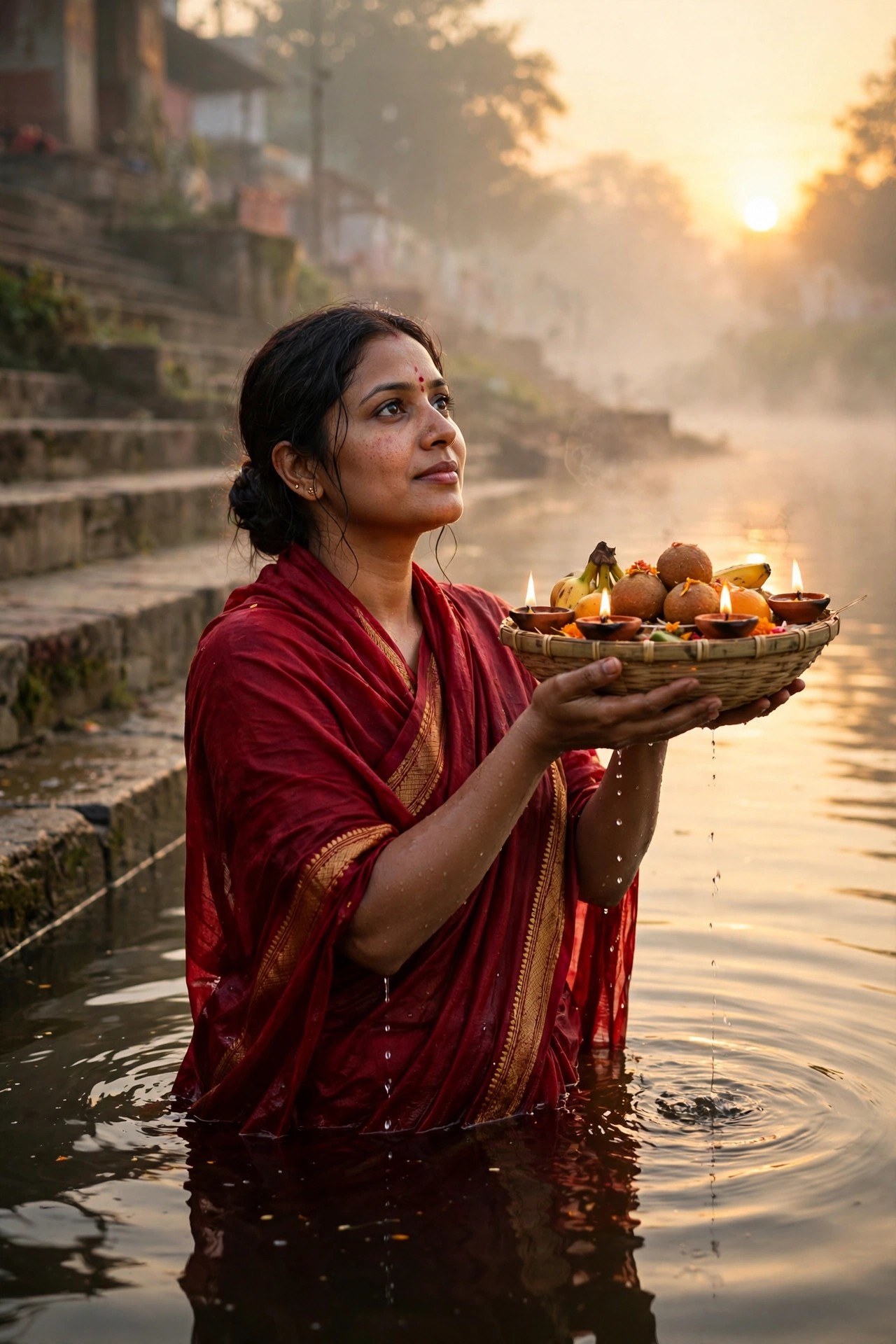
The first prompt is the one most people want: the morning arghya. You stand waist-deep in the river at sunrise, holding the soop of offerings up toward the rising sun, mist on the water and ghat steps behind you. It is the calmest of the three, and the one that best captures the festival.
Using AI image generation, transform the uploaded photo of one person into a photorealistic Chhath Puja sunrise portrait.
The person: keep exactly one person, exactly as in the uploaded photo — same face, same hairstyle, same traditional outfit in a deep red saree with subtle gold embroidery. Do not add any other person. Do not dress the person as a deity or in a deity costume.
The scene: the person stands waist-deep in a calm river at sunrise, holding a bamboo soop basket of offerings — seasonal fruit, thekua and small lit clay diyas — up with both hands toward the rising sun. Soft mist lies over the water and ghat steps are visible behind them.
Style: photorealistic, soft golden sunrise light, natural skin texture, calm and devotional mood, vertical portrait. No text, no logos, no watermarks, no other people.
Keep the person in the water. Waist-deep, with the surface rippling around them, is what makes this image unmistakably Chhath — a portrait on dry ground with a river behind it is a different photograph.
Prompt 2: The Sunset Arghya at the Ghat
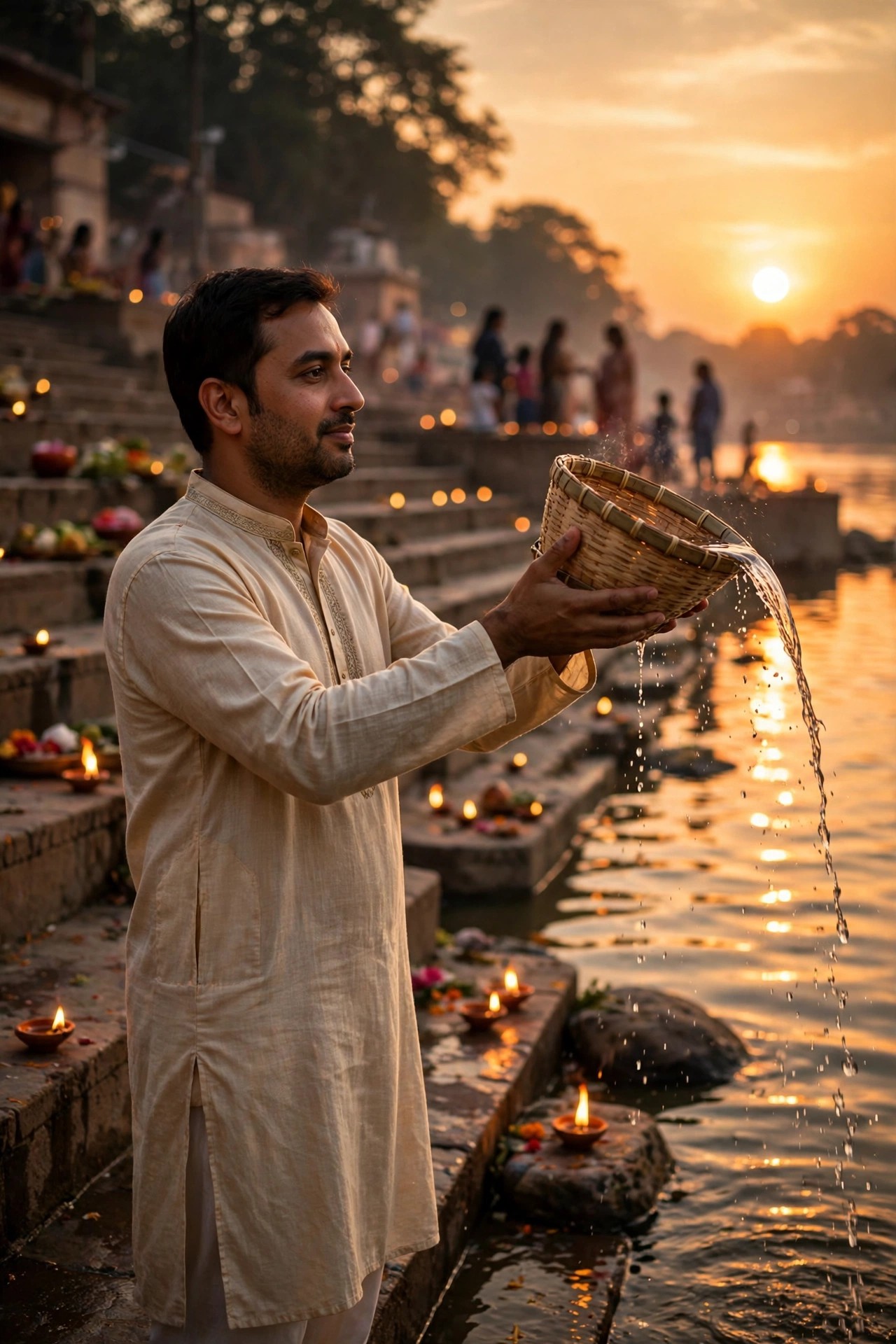
The second prompt is the evening arghya. You stand at the ghat at sunset, holding the soop as the sun goes down, with diyas glowing along the steps and family silhouettes soft and distant behind you. The ghat is fuller at sunset, but the focus stays on one person and one basket.
Using AI image generation, transform the uploaded photo of one person into a photorealistic Chhath Puja sunset portrait.
The person: keep exactly one person in focus, exactly as in the uploaded photo — same face, same hairstyle, same traditional outfit in a cream kurta. Do not dress the person as a deity or in a deity costume. Other people may appear only as soft, distant silhouettes on the ghat steps behind them, never in focus and never identifiable.
The scene: the person stands at a river ghat at sunset, holding a bamboo soop basket of offerings toward the setting sun. Warm orange light reflects on the river, and small clay diyas glow along the ghat steps.
Style: photorealistic, warm sunset light, natural skin texture, respectful and peaceful mood, vertical portrait. No text, no logos, no watermarks, no identifiable faces in the background.
Let the background stay soft. The family silhouettes should be out of focus and far away — if they sharpen, the portrait turns into a group photograph and the quiet of the moment is lost.
Prompt 3: The Soop-and-Diya Detail Portrait
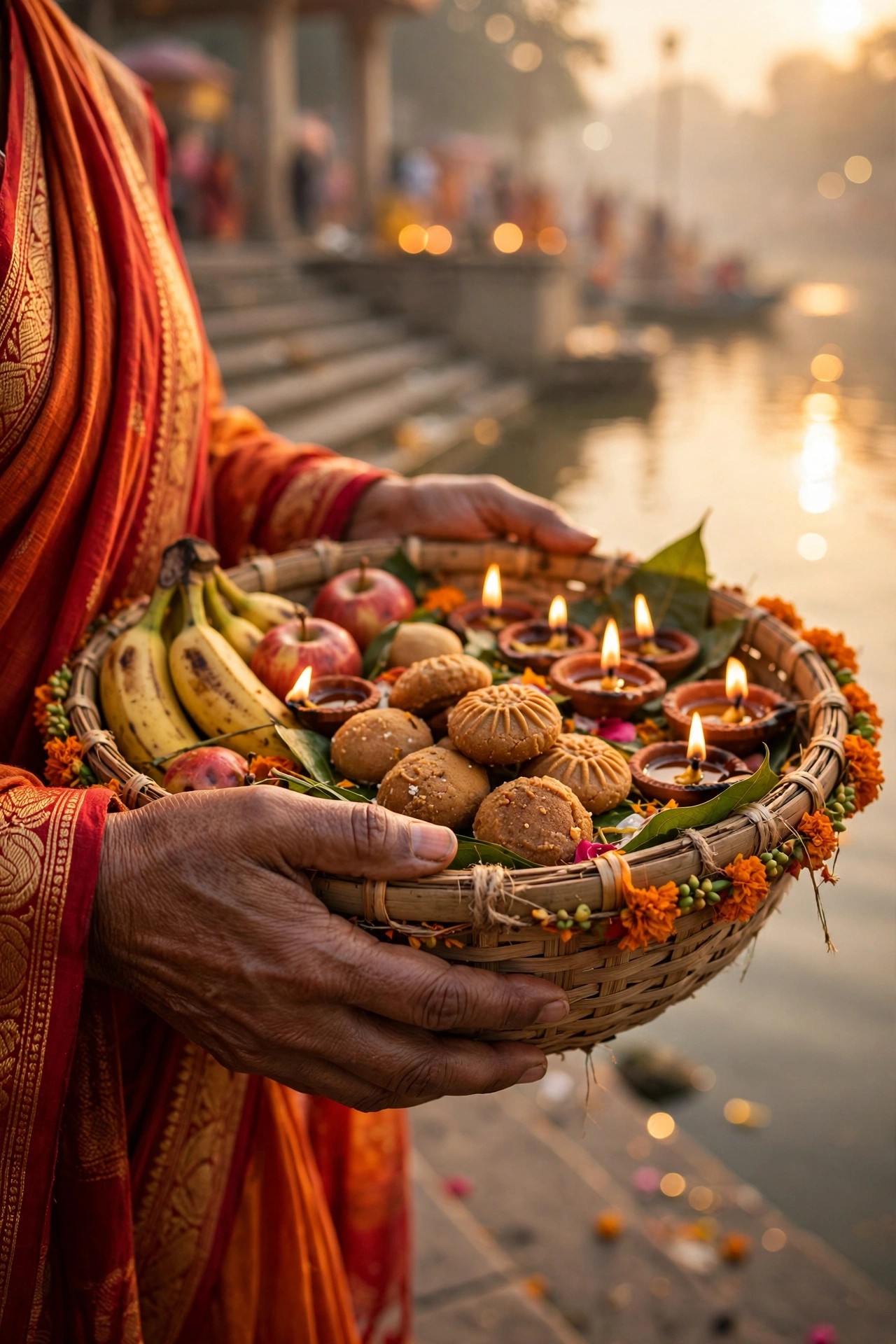
The third prompt is a close detail, not a full portrait. The camera comes in tight on the soop itself: fruit, thekua and lit diyas in a bamboo basket, held in your hands, with the sunrise and the river soft and golden behind it. It works well as a companion to either of the first two prompts.
Using AI image generation, transform the uploaded photo of one person into a photorealistic close-up Chhath Puja portrait.
The person: show only the person’s hands and the edge of their traditional outfit in a deep red saree with subtle gold embroidery, exactly as in the uploaded photo. Do not show the face. Do not add any other person. Do not dress the person as a deity or in a deity costume.
The scene: the person’s hands hold a decorated bamboo soop basket filled with seasonal fruit, thekua sweets and small lit clay diyas, at a river ghat at sunrise. Warm golden light and the river blur softly behind it, and marigold flowers decorate the basket’s edge.
Style: photorealistic, warm golden light, shallow depth of field, natural skin texture, respectful and peaceful mood, vertical portrait. No text, no logos, no watermarks, no other people.
Check the flames first. The diyas should burn steadily and clearly. If a flame is missing, doubled, or floating above its lamp, regenerate — a detail portrait lives or dies on small things like that.
Tips That Actually Help
Use the same photo for all three prompts. Changing the photo between prompts makes the face drift. One photo, three prompts, one consistent look.
Post the three as a series. Sunset arghya, sunrise arghya, soop detail — three images, three days.
A Note on Respect, and on Real River Safety
These prompts make pictures, not instructions for observing the festival. Chhath is a demanding fast, observed with care by devotees who prepare for it over days. If you observe it, follow your family’s practice and the guidance of elders — an AI photograph does not change what the fast asks of you, and it should never be presented as if it does.
The same care applies to the river itself. These images show a person standing in water at dawn, which is safe in a photograph and can be dangerous in real life. Never wade into a river alone, at night, or in a current you do not know. Keep children supervised at the ghat, stay on the steps used by other families, and follow local rules. Diyas should sit on a stable surface and never be left burning unattended. The safest version of any of these portraits is the AI version: the light is in the picture, and no one is anywhere near deep water.
Frequently Asked Questions
Can I use these prompts with a photograph of someone else?
No. Use only your own photograph — using another person’s photograph without their permission can lead to the image being removed.
Which tool should I use?
Any image-to-photo AI tool works, including Google Flow, ChatGPT image tools, Gemini, and similar tools. Start on a free tier, make a test portrait, and only think about a paid plan if you like the results.
When is Chhath Puja in 2026?
Chhath Puja is observed from 13 to 16 November 2026. The evening arghya to the setting sun falls on the third day, and the morning arghya to the rising sun on the fourth day, after which the fast is broken.
Why does my result look different from the demo image?
Because your result starts from your photograph, while the demo starts from an imagined person. The framing, light and mood should feel similar, but the face and background will follow your photograph, not the demo.
Can I make a couple version from these prompts?
These three prompts are written for one person in focus. The sunset prompt allows soft, distant family silhouettes in the background, but the person offering arghya is always one person. If you want a family photograph, take one at the ghat with a real camera.
Final Words
A good Chhath photograph does not need a crowd or a dramatic pose. One river, one basket, one low sun — and a person standing still in the middle of it. If you try these prompts, start with the sunrise arghya, and make it before the festival, while there is still time to try a second version. If this is your first chhath puja ai photo, keep it simple, keep it respectful, and let the festival do the talking.
For more festival formats, new looks land in the trending collection every week. To read more about AI image tools, this Google Flow guide is useful.
About Pinky Chouhan
Hey, my name is Pinky Chouhan, and I live in India. I am passionate about discovering new AI trends, AI video tools, and social media content ideas. I also have experience in video and photo editing using tools like CapCut, Adobe, InShot, and VN. Over time, I have worked on many editing projects and enjoy experimenting with new creative techniques and AI-powered tools. I regularly share the latest AI trends, video prompts, and creative ideas on The Prompt Master. My goal is to provide simple and practical prompts that anyone can use to create engaging AI videos. Most of the prompts published on this website are designed to be easy to use. You can simply copy a prompt, paste it into Google Flow or a compatible AI video tool, and start creating your video. I will continue sharing new AI trends, useful prompts, editing tips, and creative ideas to help creators make better content and stay updated with the fast-changing world of AI.